Key Takeaways
- A properly sized Pipe Lifting Choker Belt enhances grip and reduces slippage during pipe handling operations.
- Correct positioning of the choker belt is crucial for stable and controlled pipe handling.
- Maintaining pipe balance while lifting ensures better control and minimizes unwanted movement.
- Regular inspection of the choker belt condition helps prevent accidents and supports consistent handling.
- Communicating specific project requirements aids in selecting the right Pipe Lifting Choker Belt for efficient operations.
SPM Equipment is a leading manufacturer of PIPE LIFTING CHOKER BELT for pipe handling requirements in oil and gas pipeline projects.
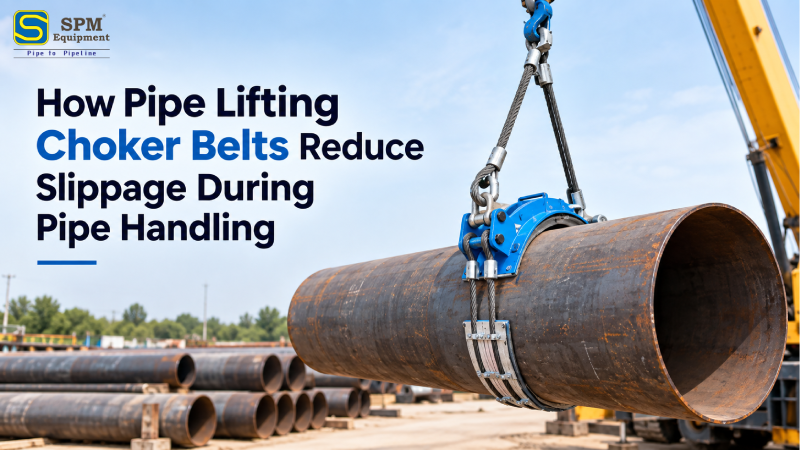
Handling large pipeline sections requires controlled lifting, stable gripping, and correct positioning throughout the movement. When a pipe shifts inside lifting equipment, operators may face difficulty maintaining the desired position. A properly selected choker belt wraps around the pipe and develops a firmer grip as lifting force is applied, helping reduce unwanted slippage during handling.
How a Choker Belt Grips the Pipe
A choker belt works differently from a simple supporting sling. The belt is positioned around the pipe so that the configuration becomes tighter as the lifting load is applied.
This tightening action increases contact with the pipe and helps restrict unnecessary movement. A correctly selected and positioned choker belt supports controlled pipe movement by maintaining consistent contact around the pipe during lifting.
For pipeline contractors, this gripping action can be particularly useful when pipes must be lifted, repositioned, aligned, or transferred during construction activities.
1. Correct Pipe Size Is Important for Grip
The relationship between the pipe diameter and choker belt size directly affects how the belt sits around the pipe.
A belt that is suitable for the pipe diameter can establish better contact around the pipe body. If the equipment does not correspond with the actual pipe dimensions, the gripping arrangement may not perform as intended.
Buyers should therefore provide the exact pipe diameter when requesting lifting equipment. For projects involving several pipe diameters, the complete size range should be discussed before equipment selection.
2. Choker Action Helps Limit Pipe Movement
One of the main reasons choker-style lifting equipment is used is the way it responds when lifting force is applied.
The operating principle can be understood in a simple sequence:
- The belt is correctly positioned around the pipe.
- The lifting equipment begins taking the load.
- The choker arrangement tightens around the pipe.
- Increased contact helps restrict sliding within the lifting arrangement.
- The pipe can then be handled with greater positional control.
The PIPE LIFTING CHOKER BELT is specifically intended for pipe lifting work where maintaining a secure grip is important during movement.
3. Proper Positioning Supports Stable Handling
Even suitable lifting equipment must be positioned correctly before lifting begins. The belt should sit in the intended location around the pipe and should not begin lifting from an uncontrolled or poorly positioned arrangement.
The lifting point, pipe balance, belt location, and movement direction should all be considered as part of the handling plan.
For B2B pipeline requirements, SPM Equipment offers choker-belt solutions intended for pipe lifting applications within oil and gas pipeline projects. The available product information also indicates that different pipe sizes can be accommodated through suitable product selection.
4. Pipe Balance Affects Slippage Control
A choker belt can provide grip around the pipe, but the overall lifting arrangement should also account for load balance.
If the pipe is lifted from an unsuitable position, its weight distribution can cause unwanted movement even when the belt itself has good contact. The lifting team should understand the pipe length, weight distribution, lifting point, and intended movement before beginning the operation.
Reducing slippage is not only about tightening the belt; it also depends on selecting and positioning the lifting equipment according to the actual pipe-handling requirement.
5. Belt Condition Should Be Checked Before Handling
Industrial lifting equipment is exposed to repeated loading, surface contact, transportation, storage, and job-site conditions. Its physical condition therefore matters before every handling operation.
Before using a PIPE LIFTING CHOKER BELT, the responsible team should inspect the equipment according to the applicable project procedure and manufacturer guidance. Damaged, excessively worn, distorted, or otherwise unsuitable lifting equipment should not simply be placed back into service without proper assessment.
Regular checks support more consistent handling and help identify visible issues before lifting begins.
6. Match the Choker Belt to the Actual Application
Pipe handling requirements vary across pipeline construction projects. A belt may be required for lifting a pipe from storage, repositioning a section, supporting alignment work, or moving pipe during another stage of construction.
When buyers approach SPM Equipment, communicating the intended application along with the pipe dimensions helps create a clearer equipment requirement.
The company’s published product information positions its pipe lifting choker belts for oil and gas pipeline lifting operations and indicates that different or customized sizes can be supplied according to requirements.
Buyer Checklist for Reducing Slippage During Pipe Handling
Before selecting and using a choker belt, buyers and project teams should verify the main handling details:
- Confirm the exact pipe diameter.
- Identify the pipe material and surface condition.
- Determine the intended lifting or handling operation.
- Consider the pipe length and load distribution.
- Confirm how the choker belt will be positioned.
- Check the lifting equipment condition before use.
- Communicate any project-specific size or handling requirement to the manufacturer.
These checks help buyers select equipment based on the real handling application rather than relying only on a general product description.
Why Slippage Control Matters in Pipeline Handling
Unwanted pipe movement makes lifting and positioning more difficult. It can interrupt the handling sequence and require operators to correct the position before the next stage of work.
A choker-style belt addresses this challenge through its tightening grip around the pipe. When the equipment is appropriately sized and correctly positioned, this gripping action helps maintain more controlled contact during lifting.
For pipeline contractors and procurement teams, the key is to consider the complete handling arrangement rather than evaluating the belt independently from the pipe and lifting method.
Why Choose Us
SPM Equipment manufactures and supplies pipeline construction equipment for oil and gas project requirements. Our PIPE LIFTING CHOKER BELT is intended to provide a secure gripping arrangement for pipe lifting and handling while helping reduce unwanted slippage during movement. We work with pipeline contractors, engineering companies, project teams, and industrial buyers who require equipment according to their pipe dimensions and application. Buyers can share their pipe size and project requirement with our team for suitable product selection.
Conclusion
Reducing slippage during pipe handling starts with the right equipment, correct sizing, proper positioning, balanced lifting, and attention to equipment condition. A PIPE LIFTING CHOKER BELT works by tightening around the pipe as lifting force is applied, creating the grip needed for more controlled movement. Buyers should consider pipe diameter, application, lifting arrangement, and site requirements before selecting equipment. SPM Equipment supports B2B pipeline projects with pipe lifting and lowering equipment designed for practical oil and gas pipeline handling requirements.
Need a dependable pipe lifting solution for your upcoming oil and gas pipeline project? Share your pipe size, lifting application, and project requirements with our sales team to discuss a suitable choker belt for your operation.
Call: +91 957 477 0022
Or Email: spmequipment@gmail.com
Contact us today with your pipeline lifting requirement and get the right equipment for controlled and reliable pipe handling.
Frequently Asked Questions
A pipe lifting choker belt is a piece of equipment designed for handling large pipeline sections. It wraps around the pipe and tightens as lifting force is applied, creating a secure grip that helps prevent slippage during pipe handling.
A choker belt reduces slippage by tightening around the pipe when lifting force is applied. This increased contact helps restrict unnecessary movement and ensures greater control during lifting and repositioning.
When selecting a choker belt, consider the exact pipe diameter, material, intended use, and lifting conditions. Proper sizing and positioning are crucial to ensure effective grip and minimize slippage.
Proper positioning is essential because a poorly placed choker belt can lead to uncontrolled lifting and increased slippage. The belt must be correctly arranged around the pipe to maintain optimal contact and support stable handling.
To ensure safety, inspect the choker belt before each use for any signs of damage, excessive wear, or distortion. Following the manufacturer’s guidelines and conducting regular checks will help maintain reliable performance and reduce risks during pipe handling.